Resources
What Happens During a Whole-Body Dental Assessment?
Many patients are surprised when a dental problem returns even after previous treatment appeared successful. Cavities may reappear, gums may continue bleeding, or tooth wear may progress despite routine care. In some cases, treating the visible problem alone may not address the factors contributing to it.
A whole-body dental assessment examines the teeth and gums while also reviewing medical history, medications, saliva, breathing patterns, previous dental work, lifestyle, and healing concerns. Biological Dentists use this wider view to understand how oral findings may connect with relevant health and treatment factors.
Within the BGS framework, these findings are evaluated together to support evidence-informed, patient-centered treatment planning rather than viewing each tooth or symptom in isolation.
How Medical History Influences Oral Health
A whole-body dental assessment often begins with a detailed conversation before any procedure is planned. The dentist reviews current medical conditions, previous dental experiences, medications, allergies, healing difficulties, and changes in symptoms. This information matters because health conditions and medicines can affect bleeding, saliva production, gum stability, treatment tolerance, and recovery.
The American Dental Association recommends maintaining an updated medical and dental history, including changes in health and medication use. A complete history also helps the dentist decide whether communication with a physician is necessary before treatment.
What Recurring Cavities and Tooth Wear Can Reveal
Recurring cavities and enamel wear can develop from different causes, including acid exposure, plaque buildup, and weakened enamel.
When cavities continue to return, the dentist may review saliva flow, diet frequency, acidic drinks, plaque retention, brushing habits, exposed tooth surfaces, and enamel strength before planning another restoration. Reduced saliva, mouth breathing, frequent snacking, or repeated acid exposure may limit remineralization and increase the risk of new decay. For example, a patient may continue replacing fillings while medication-related dry mouth remains an unaddressed risk factor.
Enamel wear may also have several causes. A dentist may assess grinding, strong bite forces, reflux symptoms, frequent acid exposure, or brushing habits. Because acid exposure can weaken and dissolve tooth enamel, dentists should assess enamel changes alongside the patient’s eating habits, medical history, and possible sources of acid exposure.
This broader evaluation helps distinguish dental erosion from grinding, abrasion, or other forms of tooth wear before treatment is planned. (Source: National Institute of Dental and Craniofacial Research)
Why Saliva Matters for Oral Health
Saliva protects the mouth in several ways. It supports speaking and swallowing, clears food particles, limits harmful microbial growth, and helps protect teeth. When saliva production falls, patients may experience dryness, altered taste, soreness, bad breath, difficulty eating, and a higher risk of tooth decay or oral infection.
The National Institute of Dental and Craniofacial Research notes that reduced saliva can increase the risk of cavities, tooth loss, and infections. Dry mouth may be associated with medications, dehydration, medical treatment, mouth breathing, or salivary gland problems. (Source: National Institute of Dental and Craniofacial Research)
During a whole-body dental assessment, the dentist may ask when dryness began, whether it is worse at night, and whether any medication recently changed. The dentist should not advise stopping prescribed medicine without consultation with the patient’s physician.
How Biological Dentists Evaluate Existing Dental Work
Existing fillings, crowns, bridges, implants, extractions, and other restorations form an important part of the assessment. The dentist checks their condition, fit, function, surrounding gum tissue, and relationship to current symptoms.
This review does not assume that every old restoration is harmful. A stable restoration may require no treatment. However, cracks, leakage, recurrent decay, tissue irritation, or changes in the bite may justify further investigation.
Within the BGS framework, existing dental work is evaluated according to its condition, function, surrounding tissues, patient symptoms, and available evidence rather than being removed simply because it is old or made from a particular material.
Why Biological Dentists Evaluate More Than Teeth

A complete dental examination may include the tongue, soft tissues, jaw, neck, and airway structures, not only the teeth.
Along with examining the teeth, a complete assessment may include the tongue, lips, cheeks, palate, floor of the mouth, and neck. These areas are checked for persistent sores, unusual colour changes, swelling, or other findings that may require further evaluation.
Gum measurements help determine whether bleeding is limited to surface inflammation or accompanied by deeper periodontal changes. Flattened teeth, small fractures, jaw tenderness, and morning headaches may also suggest clenching or grinding.
Together, these findings help the dentist separate active disease from changes that only require monitoring. For example, persistent gum bleeding may require deeper periodontal evaluation rather than repeated surface treatment alone.
When CBCT Imaging Is Necessary
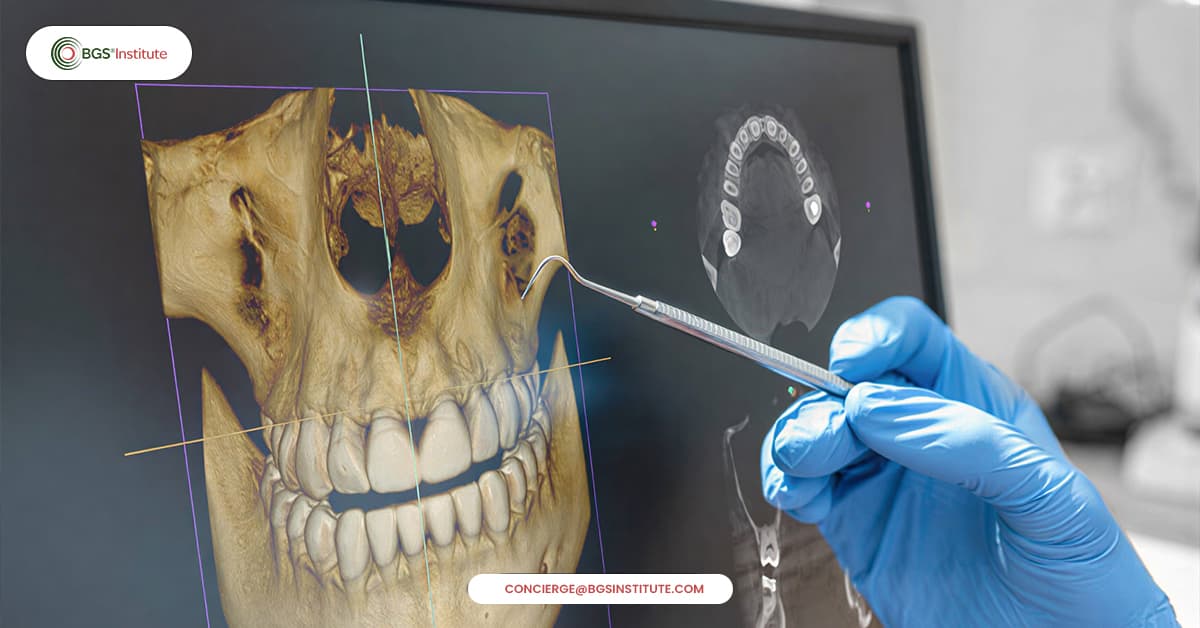
Digital X-rays may be used to identify decay, bone changes, infections, and problems around previous dental work. In more complex cases, the dentist may recommend cone beam computed tomography, commonly called CBCT.
CBCT creates three-dimensional images of the teeth, jaws, and nearby structures. The United States Food and Drug Administration lists uses such as implant planning, evaluation of abnormal teeth, dental trauma, and examination of the jaws and face.
CBCT radiation exposure can vary widely according to the scanner, field of view, imaging settings, and type of conventional dental radiograph used for comparison. Research has reported CBCT doses as higher than, similar to, or lower than conventional dental radiography in different clinical settings.
For this reason, CBCT should be recommended only when three-dimensional imaging is expected to provide information that cannot be obtained through a lower-dose examination. (Source: National Institutes of Health, PubMed Central) Intraoral photographs may also document cracks, gum changes, and worn restorations while helping patients see what the dentist sees.
Microbial Testing Has a Limited Supporting Role
The mouth contains a complex community of microorganisms known as the oral microbiome. The goal of oral care is not to remove every microorganism. It is to control harmful buildup while supporting a stable oral environment through hygiene, saliva, nutrition, and professional care.
In selected periodontal cases, a dentist may consider salivary or microbial testing to gather additional information about bacterial patterns. Salivary testing may provide supporting information about selected oral and systemic health markers, but its clinical value depends on the specific test, collection method, patient factors, and available evidence. (Source: National Institutes of Health, PubMed Central)
Testing should therefore support a gum examination, periodontal measurements, imaging, and medical history. It should not replace them or be presented as proof that an oral organism caused a systemic condition.
The Role of Airway and Sleep Assessment
Mouth breathing, snoring, waking with a dry mouth, disrupted sleep, morning headaches, daytime tiredness, and reported pauses in breathing may justify an airway and sleep discussion. Bruxism-related signs may also occur alongside disturbed sleep, although they cannot independently confirm a sleep disorder.
During the assessment, the dentist may review breathing habits, oral structures, tongue position, dry mouth, tooth wear, and relevant symptoms. Screening questions may be appropriate when the patient’s history or clinical findings suggest that further evaluation could be useful.
A dentist does not diagnose obstructive sleep apnea solely from dental signs, questionnaires, or automated home-test results. When relevant concerns are identified, the patient should be referred to a physician or qualified sleep professional. The American Academy of Sleep Medicine states that home sleep apnea testing should follow an appropriate medical assessment and qualified interpretation.
How Assessment Findings Shape Treatment Planning

Assessment findings help the dentist explain treatment priorities and create a conservative, patient-specific care plan.
After the examination, the dentist should explain the main findings, treatment priorities, available options, expected recovery, limitations, and follow-up needs. The final plan may include urgent care, monitoring, preventive changes, further imaging, material selection, or specialist referral.
Conservative care means preserving healthy tooth structure where possible. It does not mean delaying treatment that is clinically necessary. The least invasive option must still address the problem safely and predictably. When a restoration is required, material selection may consider strength, location, bite pressure, appearance, known sensitivities, clinical evidence, and patient preference.
Where Biological Dentistry and Medical Care Meet
A Biological Dentist may identify signs that deserve medical attention, but systemic diagnosis remains within the appropriate healthcare professional’s role. Concerns involving blood sugar, medication effects, sleep disorders, unexplained bleeding, or complex inflammatory conditions may require collaboration with a physician or relevant specialist.
This professional boundary makes whole patient care more credible. The dentist contributes oral findings and dental expertise while the medical professional evaluates concerns outside dental scope.
What Patients Should Expect After the Assessment
After a comprehensive Biological Dentistry assessment, the patient should receive three clear answers: what the dentist found, why it matters, and what should happen next. More tests do not automatically create better care. Each examination, image, or referral should answer a defined clinical question. The value of the assessment lies in turning relevant findings into a proportionate plan that the patient can understand before treatment begins.
Learn the Whole-Body Assessment Framework Through the BGS Masterclass
The BGS Masterclass introduces dentists to a structured framework for whole-patient assessment and evidence-informed treatment planning. This approach supports more consistent and patient-centered clinical decision-making without extending beyond the appropriate scope of dentistry.
Dentists exploring biological dentist training, a biological dentistry course, or biological dentistry certification can use the Masterclass to build a stronger foundation in whole-patient assessment. Build a more structured, evidence-informed approach to whole-patient assessment through the BGS Masterclass.
Frequently Asked Questions
What Is a Whole-Body Dental Assessment?
A whole-body dental assessment combines a detailed oral examination with a review of relevant health history, medications, saliva, breathing patterns, previous dental work, and treatment risks.
How Is a Biological Dentistry Assessment Different?
A Biological Dentistry assessment considers oral findings alongside relevant medical history, saliva, airway signs, healing risks, existing dental work, and patient priorities. It does not replace medical diagnosis or specialist care.
Why Does a Biological Dentist Review Medical History?
Medical conditions and medications may affect bleeding, saliva production, gum health, treatment tolerance, and recovery. Reviewing this information helps the dentist identify risks and determine whether medical coordination is needed.
Does Every Patient Need CBCT Imaging?
No. CBCT should be recommended only when three-dimensional imaging is expected to provide clinically necessary information that a standard examination or conventional X-rays cannot provide.
Will Treatment Begin During the First Biological Dentistry Appointment?
Not always. Complex cases may require examination, imaging, record review, specialist input, or medical coordination before treatment begins.