Resources
Ceramic vs Titanium Dental Implants: Which Is Safer?
Tooth loss does not just change how you look, it slowly affects how your entire mouth functions. But here is what most people miss. The real risk is not the missing tooth, it is the material placed inside your body to replace it. Many implants are made from metal, and while they work, they may not be as neutral as you think. Your body can react in ways you do not notice immediately.
This is why understanding ceramic vs titanium dental implants matters more than ever. When comparing ceramic vs titanium, understanding safety, durability, and biological compatibility is essential. In this guide, you will discover which option is safer, more aesthetically pleasing, and better aligned with different patient needs.
Tooth Loss and Its Impact on Your Bone Health
When a tooth is lost, the jawbone underneath starts weakening because it is no longer stimulated. This process can lead to gradual bone loss and reduced bone density, which can gradually affect facial structure over time. Over time, this may cause premature aging and affect the stability of surrounding teeth. Because implant stability depends heavily on healthy bone support, some patients also explore nutrients linked to bone health, such as boron.
Dental implants are designed to solve this problem. They act like artificial tooth roots that integrate with the jawbone and help maintain bone density. This process is known as osseointegration and it plays a key role in keeping the jaw strong and functional.
Successful implant healing also depends on healthy bone and gum tissue during the recovery process. Nutrients involved in collagen production and tissue healing, such as glycine, may also support recovery after implant placement.
However, the success of this process is not only about placing an implant. It also depends on how the body reacts to the material. This is why understanding implant biocompatibility is essential before making a decision.
Why Titanium Dental Implants Became the Standard
Titanium implants have been used for more than 60 years and are widely considered the traditional option in dentistry. Their popularity comes from their strength, durability, and ability to bond with bone effectively. These implants usually have a two piece design, which allows flexibility during placement. This makes them suitable for complex cases, including multiple missing teeth and high bite pressure areas. (Source: NIH)
Studies show that titanium implants have a success rate of around 95 to 97 percent and can last over 20 years with proper care (source: PubMed Research). Because of this long history, many dentists still consider titanium the gold standard.
But being widely used does not always mean it is the most suitable option for every patient. Systematic reviews published in PubMed have consistently shown high survival rates for titanium implants over long-term follow-up periods. (Source: NIH)
Hidden Concerns with Titanium Implants

Biological Dentistry addresses potential risks of metal implants and promotes safer, biocompatible alternatives for long-term oral health
Although titanium is strong and reliable, it is still a metal, and that raises important concerns from a health perspective. According to recent research, titanium is not completely inert inside the body.
Over time, small titanium particles may be released into surrounding tissues. This can happen due to mechanical stress or corrosion. These particles may trigger inflammation or immune responses in some individuals (source: NIH studies).
Another issue is the possibility of metal sensitivity. While rare, some patients may react negatively to metal based implants. There is also a concept called galvanic reaction, where titanium interacts with other metals in the mouth, potentially causing discomfort.
As highlighted in the newsletter, titanium implants can lead to inflammation and immune response due to particle release and corrosion. These factors are important because they may influence how surrounding tissues respond over time.
The Rise of Ceramic Implants in Modern Biological Dentistry
Ceramic implants, also known as zirconia implants, are a modern alternative designed to work more naturally with the body. Unlike titanium, ceramic implants are completely metal free. They are generally well tolerated by surrounding tissues and may reduce material-related concerns in some patients.
Another important factor is that ceramic implants are made as a single piece, which reduces gaps where bacteria can collect. This supports better gum health and lowers the risk of infection over time.
Clinical research shows that ceramic implants perform comparably to titanium in many cases, especially in visible areas of the mouth. Allergic reactions are extremely rare, although individual responses can vary. ( Source: PubMed)
Benefits of Ceramic Implants for Health and Aesthetics

Biological Dentistry uses ceramic implants for biocompatible, metal-free, and natural-looking tooth replacement solutions
Ceramic implants offer several advantages that align with modern treatment approaches. They are often preferred by patients looking for non-metal alternatives or more aesthetic implant options. Their white color blends with the natural tooth structure, preventing any dark shade from showing through the gums.
One reason ceramic implants are widely discussed is their favorable tissue compatibility. Ceramic materials are designed to interact gently with surrounding tissues, which is one reason they are commonly chosen in biologically focused treatment approaches.
Ceramic implants are also corrosion resistant, meaning they do not break down inside the body. They tend to attract less plaque, which supports better oral hygiene and gum health. Allergic reactions to ceramic implants are extremely rare, although individual responses can vary.
Ceramic vs Titanium Dental Implants
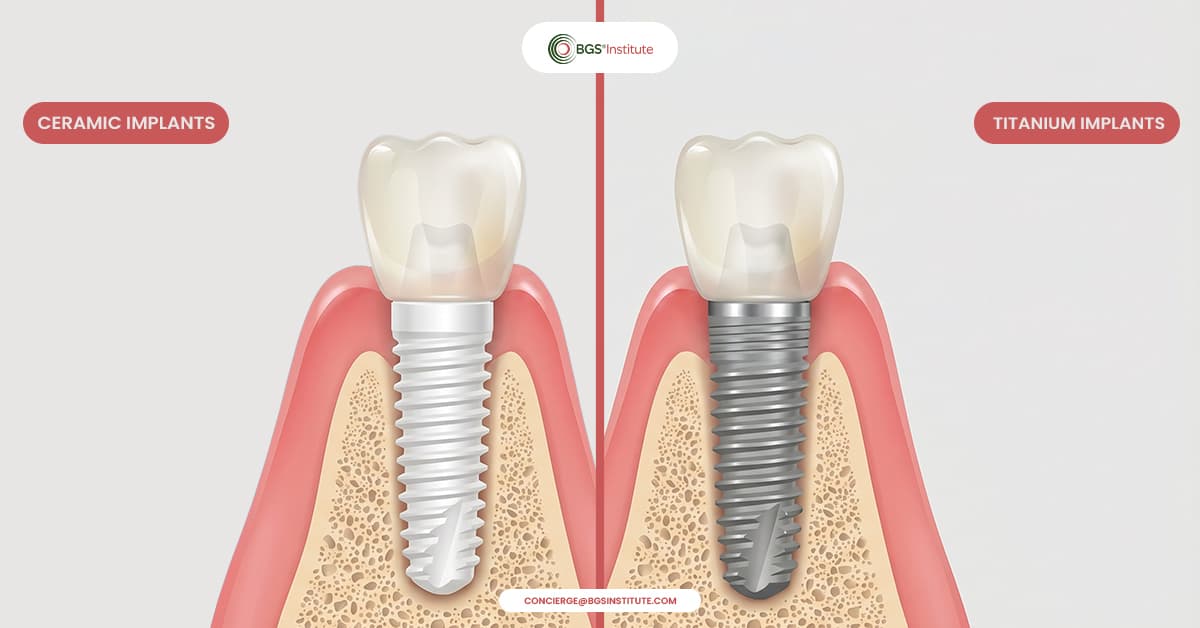
Understanding the difference between these materials helps you make a more informed decision. Titanium implants are strong, flexible, and have a long history of success. They are often used in complex cases and for areas that require high strength. Ceramic implants are often preferred for front teeth because their white color blends more naturally with the gums. They are also commonly selected by patients seeking non-metal restorative options.

Titanium and ceramic dental implants compared across key factors including durability, aesthetics, tissue response, and metal-free compatibility
Titanium implants remain the most extensively studied and widely used option, with strong long-term success rates and predictable outcomes. Ceramic implants, on the other hand, are gaining attention for their metal-free composition and aesthetic advantages, with growing clinical evidence supporting their use. The choice ultimately depends on patient priorities, clinical needs, and practitioner experience.
In simple terms, titanium is known for strength, while ceramic is often chosen for its aesthetic appearance and tissue compatibility. Both have their place, but the choice depends on your priorities.
What Do Clinical Studies Say About Implant Materials
Scientific evidence provides valuable insight into how these implants perform in real situations. A randomized clinical trial comparing ceramic and titanium implants in the front teeth found no significant difference in aesthetics or patient satisfaction (Source: NIH).
This means ceramic implants are not just an alternative. They are a proven and reliable option, especially for areas where appearance matters most. This also supports the idea that patients do not have to compromise performance when choosing an alternative material option.
Why Modern Dentistry Is Shifting Toward Biological Approaches
Many modern dentists now consider not only strength and durability, but also how implant materials interact with surrounding tissues over time. This growing interest in material compatibility has contributed to the popularity of ceramic implants in certain patient groups.
Experts such as Dr. Dominik Nischwitz highlight the importance of choosing materials that reduce stress on the immune system and are preferred by some health-conscious patients (Source: Dr. Dome). As patient preferences evolve, ceramic implants are becoming a more common option in certain restorative cases.
How to Choose the Right Implant for Your Needs

Biological Dentistry guides patients in choosing biocompatible dental implants for safer and long-term oral health outcomes
Choosing the right implant is not about which one is better overall. It is about what is better for your specific situation. Titanium implants may be suitable if you need maximum strength, have complex dental conditions, or are looking for a more cost effective option.
Ceramic implants are often the better choice if you value aesthetics, want a metal free solution, or have concerns about long term health effects. They are especially useful for front teeth where appearance is important. Other factors include bone quality, bite pressure, and overall health. A detailed consultation is essential to make the right decision.
Conclusion
Dental implants have changed the way we treat tooth loss, but the material used in these implants is just as important as the procedure itself. While titanium implants remain strong and widely used, they come with certain limitations related to metal exposure and long term biological response.
Ceramic implants provide an alternative focused on aesthetics, material compatibility, and patient preference. Clinical research supports their effectiveness, especially in visible areas.
As dentistry continues to evolve, the focus is shifting toward solutions that not only restore function but also support overall health. Choosing the right implant today means thinking beyond strength and considering what is truly best for your body in the long run.
Redefine How You Practice Dentistry
If you want to understand how dentists evaluate implant materials, patient health, and long-term outcomes, structured Biological Dentistry training provides a clear framework. This can help you make more informed decisions in modern clinical practice.
FAQs
1. Which implant is safer, ceramic or titanium?
Both materials are widely used in modern dentistry. Ceramic implants are often chosen by patients seeking non-metal alternatives or those with sensitivities to certain materials.
2. Can titanium implants cause inflammation?
Titanium works well for most people, but in some cases, particles may release over time. This can lead to mild inflammation or immune reactions in sensitive individuals.
3. Are ceramic implants as effective as titanium?
Yes, research shows that ceramic implants perform similarly to titanium, especially in front teeth. They offer reliable results without compromising aesthetics or function.
4. Which implant looks more natural?
Ceramic implants provide a more natural look because they are white and blend with teeth and gums. Titanium implants may appear gray if gums recede.
5. Who should choose ceramic implants?
Ceramic implants are ideal for those who want a non-metal and aesthetic implant option. They are especially suitable for visible areas and health conscious patients.
6. Are ceramic implants safer than titanium?
Ceramic implants may be preferred in patients seeking metal-free options or with sensitivities, while titanium remains the most extensively studied implant material.
%2520(1).png&w=2048&q=75)