How Laser Therapy May Support Healing in Modern Dentistry
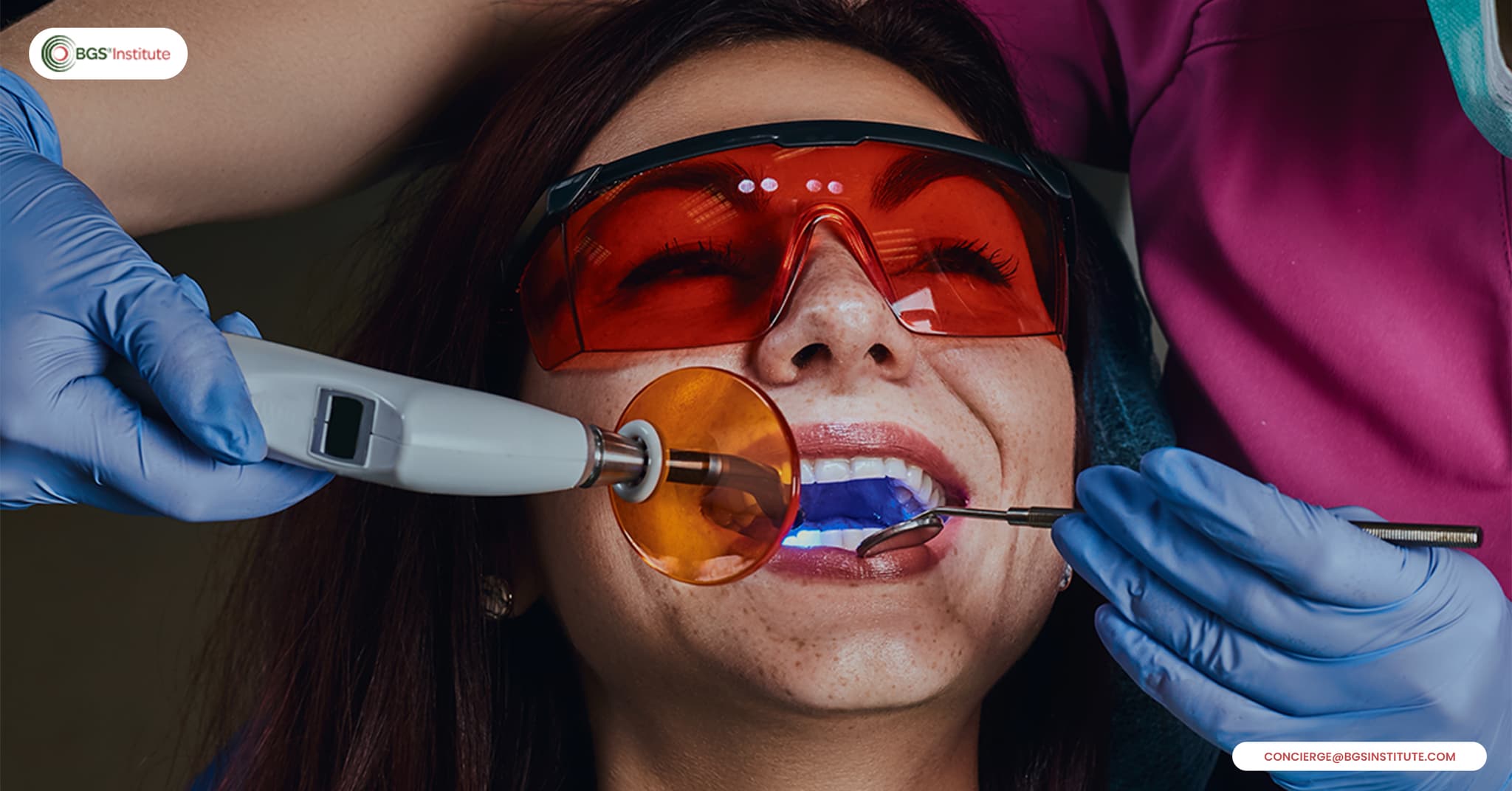
Research on photobiomodulation (PBM) suggests that low-level laser therapy may support tissue recovery and improve healing response after dental procedures. This approach is increasingly being integrated into modern dental care as part of supportive dental care strategies. In some modern dental approaches, laser therapy is used to support the body’s natural healing processes rather than relying solely on mechanical or surgical interventions.
By interacting with cells at a mitochondrial level, laser therapy may help improve recovery outcomes while minimizing tissue stress. Clinical studies published in PubMed have indicated that photobiomodulation may help reduce inflammation and support tissue healing in dental applications. (Source: PubMed)
What Is Photobiomodulation (PBM)?
.jpg%3F2026-05-14T08%253A33%253A26.147Z&w=2048&q=75)
Photobiomodulation therapy uses low-level light energy to support cellular healing, reduce inflammation, and improve tissue recovery
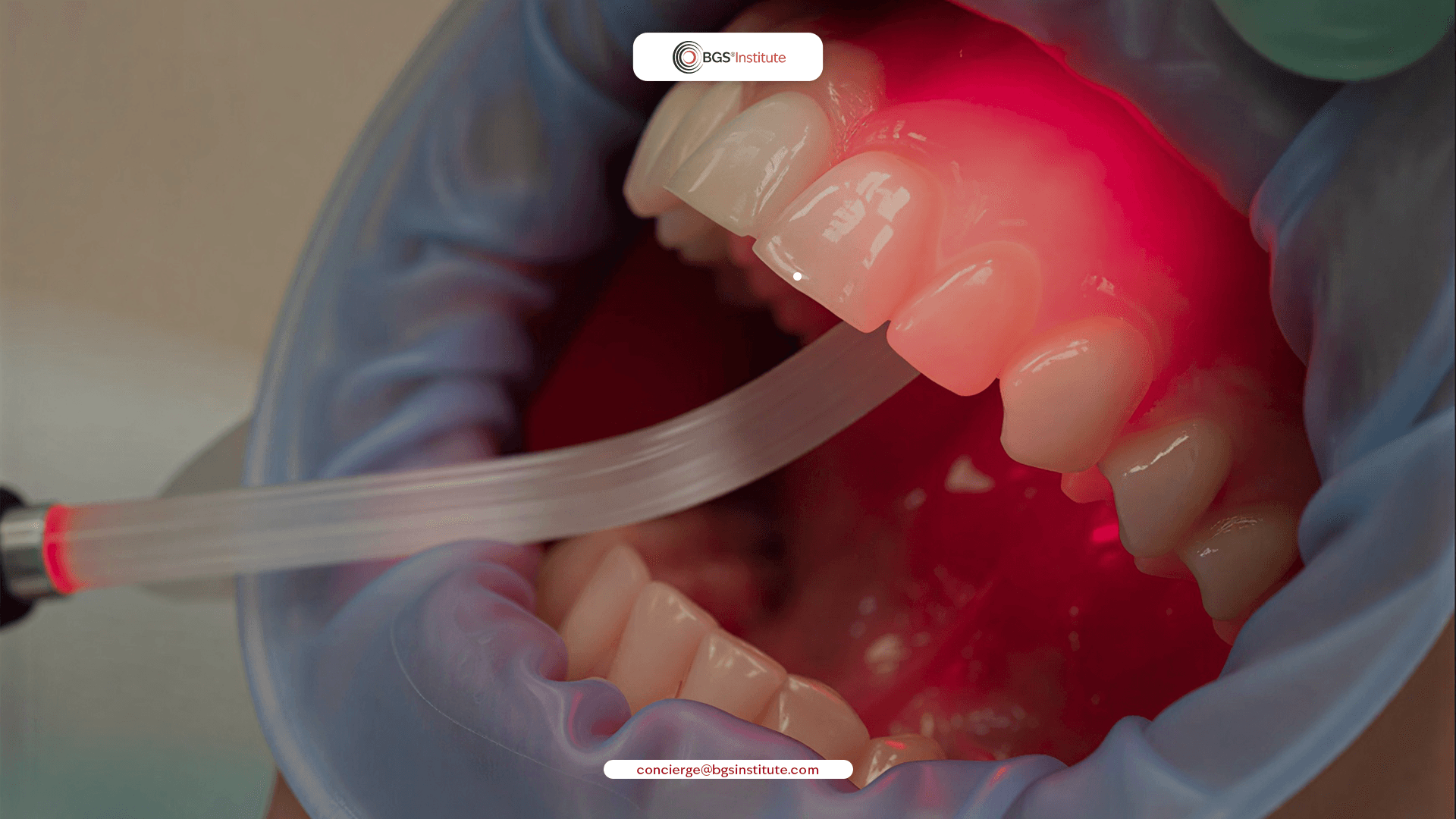
Photobiomodulation refers to the use of low-level laser or light energy to influence cellular function. Unlike surgical lasers, PBM does not cut or remove tissue. Instead, it delivers controlled light energy that may stimulate biological processes within cells.
This form of therapy has been studied in various medical fields for its potential role in reducing inflammation, supporting healing, and improving tissue repair.
How Laser Therapy Works at the Cellular Level
Laser therapy works through light absorption within the mitochondria, the energy-producing structures of cells. When light energy is absorbed, it may enhance the production of adenosine triphosphate (ATP), which is essential for cellular activity. Increased ATP availability may support:
Cellular repair and regeneration
Improved microcirculation
Reduced inflammatory response
Some studies suggest that PBM may also influence oxidative stress and cellular signaling pathways, which can contribute to improved healing environments. This mechanism has been supported by clinical research in low-level laser therapy, where improved cellular activity is associated with better healing responses in certain conditions. (Source: PubMed Central PMC)
Benefits of Laser Therapy in Dentistry
Laser therapy is being explored as a supportive tool in dental care. While outcomes can vary depending on the patient and clinical context, it may offer several potential benefits:
May support improved healing after procedures such as tooth extractions, gum therapy, or implant placement.
Some studies suggest it can help reduce swelling and inflammation after procedures
Some patients also report improved comfort during post-treatment recovery. This approach is often explored in treatments focused on recovery support.
It is important to note that laser therapy is typically used as an adjunct, not a replacement for established dental treatments.
Clinical Applications in Dental Practice

Laser therapy in dental practice may support tissue healing, inflammation management, and improved recovery after dental procedures
Laser therapy is used in a range of dental applications where tissue healing and inflammation management are important. In periodontal (gum) therapy, it may support the reduction of inflammation and assist in improving tissue response. For example, it may be used after gum surgery or implant procedures to support recovery.
In addition, laser therapy may be used as an adjunctive approach in managing oral inflammation and supporting infection control, depending on the clinical situation. Its role in soft tissue procedures further highlights its potential in promoting more favorable healing conditions. However, clinical outcomes can vary and depend on factors such as proper protocol selection, the patient’s condition, and the overall treatment plan.
Nutritional Support for Healing in Dentistry
In some integrative care models, nutritional support is considered alongside dental treatment to promote healing. Nutrients involved in bone and tissue support, such as vitamins, minerals, and amino acids, may contribute to recovery during healing. However, it is important to note:
Nutritional therapies are not standard in all dental practices
Evidence varies depending on the intervention
These approaches are typically used under medical or integrative care supervision
Safety and Limitations of Laser Therapy

Laser therapy in dentistry requires proper clinical protocols, professional training, and should be used as a supportive treatment rather than a replacement for standard procedures
While photobiomodulation is generally considered safe when used appropriately, it is not a universal solution. Important considerations include:
Outcomes may vary between patients
It requires proper clinical protocols and training
It is not a replacement for necessary dental procedures
Evidence is still evolving in some areas
Patients should receive treatment from trained professionals who understand appropriate indications and limitations. Clinical outcomes also depend on factors such as wavelength selection, dosage, and proper treatment protocols, which require professional training. (Source: PubMed Central)
How Biological Dentistry Uses Laser Therapy
Biological Dentistry focuses on the relationship between oral health and overall systemic health. Within this framework, treatments are designed to support the body’s natural processes and minimize unnecessary intervention. Laser therapy is often included in these approaches because it may support recovery while minimizing tissue stress.
While traditional dentistry primarily focuses on diagnosing and treating specific conditions, Biological Dentistry may incorporate additional considerations such as inflammation, immune response, and long-term tissue health.
Both approaches play important roles in patient care, and many modern practices integrate elements of both depending on the clinical situation. Traditional dentistry remains highly effective for many procedures, while biological approaches aim to complement it by supporting systemic health and natural healing processes. (Source: PubMed Central)
Conclusion
Laser therapy, particularly in the form of photobiomodulation, represents an evolving area in dental care. By supporting cellular activity and tissue response, it may offer a complementary approach to improving healing and patient comfort.
As research continues to develop, laser therapy is becoming an increasingly relevant tool in biological and integrative dentistry. However, its use should be guided by clinical evidence, appropriate protocols, and professional judgment.
FAQs
1. What is photobiomodulation in dentistry?
It is the use of low-level laser or light therapy to support recovery and healing through low-level light therapy.
2. Is laser therapy safe in dental treatments?
When used by trained professionals, laser therapy is generally considered safe and is widely used as a supportive treatment in dentistry.
3. Does laser therapy replace traditional dental procedures?
No, it is typically used as an adjunct to support healing and improve patient outcomes alongside standard treatments.
4. What conditions can laser therapy help with?
It may be used in gum therapy, post-surgical healing, inflammation management, and soft tissue support.