Resources
How Biological Dentists Approach Complex Treatment Planning

Not every dental case has an obvious answer. A patient may report persistent facial pain even when radiographs appear normal. Another may have a previous root canal treatment, several existing restorations, a complex medical history, and symptoms with more than one possible cause.
Treatment planning becomes more difficult when clinical findings conflict or several options appear reasonable. The dentist must decide what information is missing, which risks matter most, whether specialist input is needed, and which step should come first.
Biological Dentists may also evaluate material exposure, healing capacity, inflammation, medical history, and possible oral-systemic connections. Within the BGS framework, structured review helps clinicians test the diagnosis, distinguish evidence from assumptions, and apply more consistent standards across complex dental cases.
Why Some Dental Cases Are Difficult to Diagnose
Some dental cases become difficult when symptoms, imaging, treatment history, and clinical findings do not support the same conclusion. For example, a patient may have discomfort around several restored teeth, periodontal inflammation, a history of sinus problems, and no single radiographic finding that explains the symptoms. The dentist must determine whether the cause is dental, muscular, neurological, medical, or a combination of factors.
Cases may also become complex when previous treatment has failed, medical history may affect healing, or several clinically reasonable options remain. Biological Dentistry can add further questions about inflammation, material tolerance, systemic health, and treatment burden.
When Peer Review Becomes Valuable
Peer review becomes valuable when the diagnosis remains uncertain, previous treatment has failed, several clinically reasonable options exist, or the case requires input from another discipline. It can also support decision-making when medical factors may affect healing or when treatment must be completed in several stages.
Within the BGS community, doctors can bring questions about their clinical cases, treatment decisions, and professional experiences into peer discussions. These conversations provide valuable support for clinicians who want to examine complex cases more carefully and work toward the Biodentistry Global Standard.
Before requesting a dental case consultation, the dentist should define one clear question. The review may need to determine whether more diagnostic information is required, whether referral is appropriate, or which condition should be addressed first.
What Information Is Needed for a Dental Case Consultation?

Complete case records help reviewers separate confirmed findings, missing information, and unresolved clinical questions.
A useful dental case consultation depends on complete and organized information. The case record should include the patient’s primary concern, relevant medical and dental history, examination findings, diagnostic images, current restorative materials, previous procedures, medications, and the treatment options already considered.
Confirmed findings should be separated from assumptions. The dentist should also identify missing tests, conflicting evidence, unresolved questions, and the specific reason a second opinion or peer review is being requested.
Presenting a focused clinical question with complete records helps reviewers identify overlooked details, assess conflicting evidence, and clarify which issues require further investigation. After the discussion, the record should document the options considered, important uncertainties, specialist input, patient priorities, and the reasoning behind the final plan. This supports continuity and allows the outcome to be compared with the original dental treatment planning process.
How Biological Dentists Evaluate Clinical Evidence
Peer review should begin with the clinical question rather than each dentist describing a preferred method. The FDI World Dental Federation’s guidance on evidence-based dentistry explains that clinical decisions should combine current research, professional expertise, and individual patient needs. (Source: FDI World Dental Federation, Evidence Based Dentistry)
Before discussing treatment, reviewers should test the initial diagnosis by asking which findings support it, which findings conflict with it, what alternative explanation remains possible, and what additional information could change the plan.
Within the BGS framework, clinicians separate confirmed findings, plausible clinical questions, and unsupported claims. This structured approach reduces the influence of early assumptions and supports more consistent review of oral-systemic variables across complex dental cases.
The study Determinants of Clinical Decision Making Under Uncertainty in Dentistry examines how incomplete evidence, diagnostic ambiguity, and professional judgment can influence treatment decisions (Source: Determinants of Clinical Decision Making Under Uncertainty in Dentistry, PubMed).
Why Treatment Sequencing Matters in Complex Dental Cases
A suitable procedure can still create problems when it happens at the wrong stage. For example, a patient may require periodontal treatment, replacement of a failing restoration, removal of an infected tooth, and later prosthetic care. Beginning the restorative phase before inflammation and healing risks are controlled may compromise the final result.
The dental treatment planning process should define the purpose of each stage, what must happen before it begins, and which result will allow the next stage to proceed. Medical risks may require physician coordination before surgery, while appointment burden, recovery time, finances, and the patient’s ability to follow instructions should also influence the sequence.
How Material Selection Affects Complex Treatment Planning

Material selection depends on function, available tooth structure, bonding requirements, clinical evidence, and long-term maintenance.
Material selection can add another layer of complexity when a case involves limited tooth structure, heavy bite forces, multiple restorations, sensitivity concerns, or long-term maintenance needs. A material should not be selected only because it is metal-free or commonly described as biocompatible.
During peer review, dentists can compare the material’s composition, mechanical strength, bonding requirements, repairability, available evidence, and expected longevity. They should also consider whether the treatment site can provide adequate isolation and whether the practice has the equipment, laboratory support, and follow-up systems required for successful use.
This connects material selection to the wider treatment plan. Biocompatibility remains important, but it must be evaluated alongside function, clinical technique, patient history, and long-term restorative goals.
How Patient Priorities Influence Treatment Planning
Peer discussion may identify clinically reasonable options, but the final consultation must include the patient. The dentist should explain the diagnosis, expected benefits, known risks, uncertainties, costs, treatment stages, and the option to delay or decline care.
One patient may prioritize preserving a natural tooth, while another may want fewer procedures, a shorter recovery period, or an option that fits a limited budget. A patient may also have concerns about a specific restorative material or previous treatment experience. These preferences do not replace clinical judgment, but they help determine which clinically acceptable option best fits the individual case.
The Role of Team Communication in Complex Dental Cases

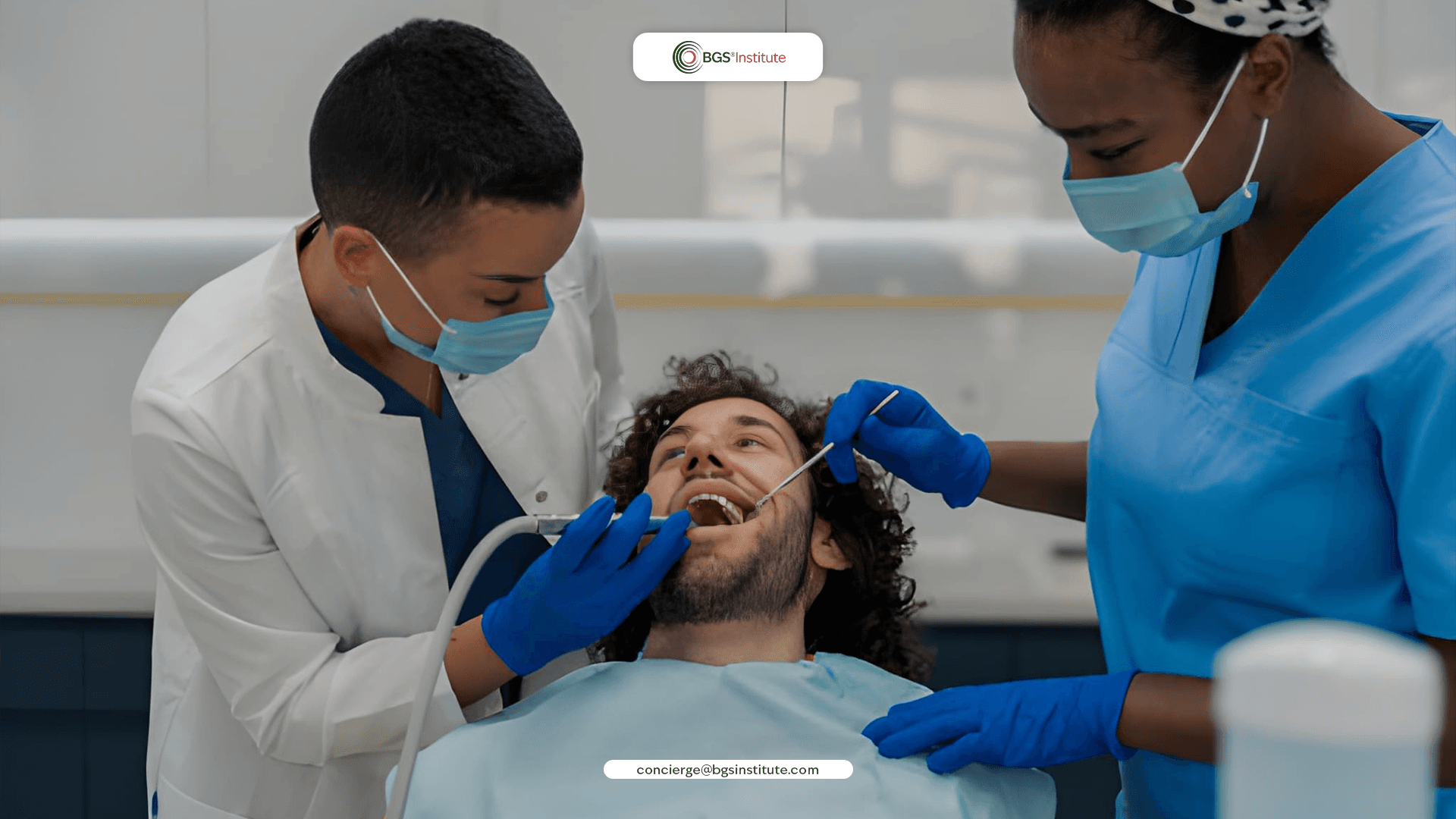
A pre-treatment team briefing helps dental professionals confirm clinical roles, equipment needs, and patient-specific requirements.
A reviewed treatment plan can still fail when the dental team receives incomplete instructions. Assistants may need preparation steps, equipment requirements, material records, and postoperative protocols. Scheduling staff need correct appointment lengths and treatment order, while coordinators must understand which stages are confirmed and which depend on reassessment.
In multidisciplinary dental care, communication may also involve specialists, physicians, laboratories, and referring providers. A short written workflow should identify responsibilities, treatment stages, equipment needs, reassessment points, and follow-up requirements. This prevents patients from receiving conflicting explanations about preparation, timing, costs, or recovery.
Why Reviewing Outcomes Improves Future Care
The case should be reviewed after treatment or after an agreed monitoring period. The dentist can compare expected results with clinical findings, symptoms, healing, function, patient reported experience, complications, and any unplanned care.
This review may reveal that the diagnosis was accurate but the treatment sequence was unrealistic. It may also show that patient instructions, follow-up timing, or team preparation need improvement. Recording these findings helps the practice improve its dental treatment planning process and provides stronger clinical evidence for future case reviews. When shared appropriately through secure professional systems, these findings can also support future peer learning and case evaluation.
When Dentists Should Seek Specialist or Medical Input
Peer review cannot replace specialist assessment, medical consultation, formal diagnostic testing, or referral when a case falls outside the treating dentist’s competence. The group should state clearly when it lacks the information or expertise required to answer the clinical question.
The treating dentist remains responsible for diagnosis, informed consent, treatment, and follow-up care. Patient records should be shared only through secure systems, with unnecessary identifying details removed and all applicable privacy and consent requirements followed.
A responsible peer group does not force an answer. It recognizes when the next step should be further investigation or referral.
How Peer Review Supports the Biodentistry Global Standard
The value of dental peer review lies in making clinical reasoning more careful, transparent, and easier to explain. It does not require every doctor to reach the same conclusion, and it does not remove responsibility from the treating clinician. Instead, it gives doctors a structured space to examine uncertainty, learn from professional experience, and improve how they approach complex cases.
Within the BGS community, doctors bring forward questions about their cases, treatment decisions, and clinical experiences. These peer discussions have become an important source of support for clinicians who are committed to developing their knowledge and working toward the Biodentistry Global Standard.
The BGS Masterclass provides an introduction to the Biodentistry Global Standard and the clinical principles behind it. It also connects doctors with a professional community that comes together to discuss cases, share experiences, strengthen clinical reasoning, and move toward a more consistent standard of Biological Dentistry.
Frequently Asked Questions
What Is Dental Peer Review?
Dental peer review is a structured discussion in which qualified dentists examine a defined clinical question, review available evidence, and identify missing information or alternative explanations. The treating dentist remains responsible for the final decision.
Why Are Some Dental Cases Difficult to Diagnose?
A dental case may be difficult when symptoms do not match imaging, previous treatment has failed, several conditions could explain the problem, or medical and oral factors interact. Additional testing or specialist input may be needed before treatment begins.
When Should Dentists Seek a Second Opinion?
Dentists may seek a second opinion when the diagnosis remains uncertain, several reasonable options exist, previous treatment has failed, or the case falls partly outside their usual experience.
How Do Biological Dentists Plan Complex Cases?
Biological Dentists review clinical findings, imaging, medical history, oral-systemic variables, restorative materials, healing risks, treatment sequence, and patient priorities before creating an evidence-informed plan.
Can Peer Review Improve Dental Treatment Planning?
Peer review can improve treatment planning by identifying missing information, challenging early assumptions, comparing reasonable options, and clarifying when additional testing or referral is needed. It cannot guarantee a specific treatment outcome.
How Does the BGS Community Support Biological Dentists?
The BGS community supports Biological Dentists through structured peer discussions, shared clinical experience, and collaborative case review.