Resources
Fluoride vs Hydroxyapatite: Which Is Better for Long Term Oral Health?
For decades, fluoride has been considered the gold standard for cavity prevention and enamel protection. Most toothpastes, dental treatments, and public water systems rely on fluoride to reduce tooth decay and strengthen teeth. However, many people are now asking an important question: does fluoride actually rebuild teeth, or does it only provide temporary protection?
At the same time, hydroxyapatite toothpaste has gained attention as a biomimetic approach to enamel remineralization. Research suggests that hydroxyapatite may help replenish minerals in areas affected by early enamel demineralization. This has created growing interest in the debate around fluoride vs hydroxyapatite and how the two ingredients differ in enamel remineralization and sensitivity support.
What Fluoride Does for Teeth?
Fluoride plays an important role in modern dentistry because it helps strengthen tooth enamel and reduce the risk of cavities. When acids from bacteria and food begin to weaken enamel, fluoride supports a process called remineralization. During this process, minerals like calcium and phosphate are redeposited into weakened enamel surfaces.
One of the main reasons fluoride became widely used is because it converts hydroxyapatite in enamel into fluorapatite, a more acid resistant material. This makes teeth stronger against daily acid attacks caused by sugar, plaque, and acidic foods. (Source: North Carolina Division of Public Health)
Research has consistently shown that fluoride can reduce dental caries in both children and adults. Water fluoridation and fluoride toothpaste remain some of the most cost effective public health strategies for cavity prevention.
Fluoride primarily supports remineralization of early enamel damage and improves enamel resistance to acid exposure. It helps repair very early damage and protects existing enamel from further breakdown. This distinction is important when discussing whether fluoride rebuild teeth and whether fluoride alone is enough for complete oral health support.
Why Some People Are Looking Beyond Fluoride?

More people are paying closer attention to oral care ingredients and choosing products that align with their long term health and wellness goals.
Despite its benefits, many people have started questioning whether fluoride addresses the deeper causes of oral health problems. Tooth decay is not caused by one factor alone. Diet, oral bacteria, saliva quality, mineral balance, inflammation, and lifestyle habits all influence oral health.
Fluoride mainly works on the outer surface of the teeth. It helps strengthen enamel, but it does not improve the oral microbiome or solve dietary issues that contribute to decay. This has led to growing conversations around more complete and preventive approaches to oral care.
Another concern involves excessive fluoride exposure. In children, consuming too much fluoride while teeth are developing may lead to dental fluorosis, a condition that can cause white streaks or discoloration on the teeth. (Source: NIH)
Some studies have also explored possible links between extremely high fluoride exposure and health concerns related to thyroid function or cognitive development (Source: National Institutes of Health). While major health organizations continue to support fluoride at recommended levels, these discussions have encouraged people to look for alternative approaches to enamel remineralization and sensitivity care for daily oral care.
What Is Hydroxyapatite?
Hydroxyapatite is not a synthetic chemical created in a laboratory. It is the natural mineral that already makes up most of human tooth enamel and bone. Because of this, hydroxyapatite is considered a biomimetic ingredient, meaning it closely mimics the body’s natural structure.
When used in toothpaste, especially nano hydroxyapatite formulations, the particles can attach directly to microscopic defects in enamel. This helps repair weakened areas and restore minerals lost during demineralization. (Source: PubMed studies on nano hydroxyapatite)
One reason hydroxyapatite has gained popularity is because it focuses on supporting enamel remineralization through biomimetic mineral replacement. Research suggests that hydroxyapatite toothpaste can perform similarly to fluoride toothpaste in preventing early cavities while also reducing tooth sensitivity.
Hydroxyapatite is generally considered biocompatible and is commonly used in oral care products designed for children and sensitive individuals.
Fluoride vs Hydroxyapatite: What Is the Difference?
Although both ingredients support enamel health, they work differently inside the mouth.

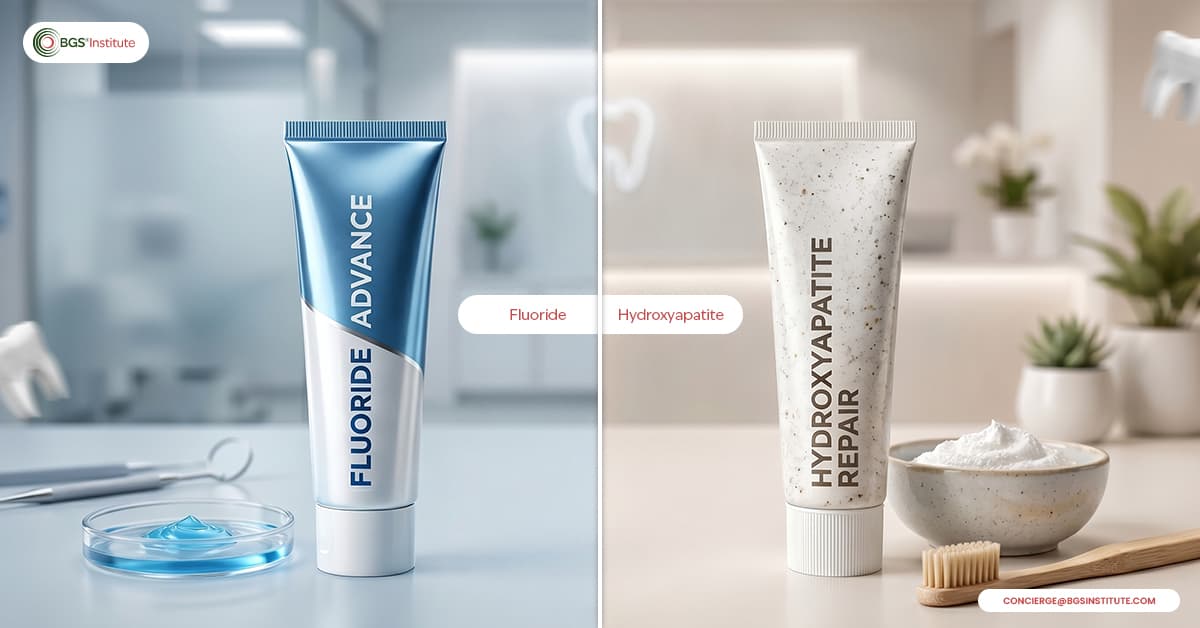
Fluoride and hydroxyapatite compared across key oral health benefits including enamel protection, remineralization, and tooth sensitivity support
The conversation around fluoride vs hydroxyapatite is not about declaring one completely good or bad. Instead, it is about understanding which approach best fits a person’s oral health needs.
Fluoride may still be highly beneficial for individuals with high cavity risk or acidic diets. Meanwhile, hydroxyapatite may be more suitable for those looking for a biomimetic approach to remineralization and sensitivity support. Some experts also believe that combining both approaches strategically may provide additional benefits for enamel protection and repair.
How Hydroxyapatite Supports Enamel Remineralization?

Hydroxyapatite is widely recognized for its role in supporting enamel remineralization and strengthening tooth structure naturally.
One of the most interesting aspects of hydroxyapatite is its ability to help replenish minerals in areas affected by early demineralization. Studies suggest that nano hydroxyapatite particles can fill microscopic pores and cracks in enamel, helping create a smoother and stronger surface.
This process is different from fluoride because hydroxyapatite directly replaces lost minerals with a material that closely matches natural enamel composition. (Source: NIH and PubMed systematic reviews)
According to a 2023 meta-analysis published in PubMed Central by H. Limeback et al., hydroxyapatite particles can help reduce dentin hypersensitivity by physically sealing exposed dentin tubules, which may decrease sensitivity triggered by temperature changes (Source: PubMed). For individuals exploring enamel remineralization strategies, hydroxyapatite offers a biomimetic alternative used in Biological Dentistry focused approaches to oral care.
Dr. Dominik Nischwitz, also known as Dr. Dome, frequently discusses the importance of viewing oral health as part of whole body health. Through his work in Biological Dentistry, he emphasizes reducing toxic burden and supporting minimally invasive and preventive approaches to oral care. This growing approach is helping establish a stronger global framework for patient focused oral healthcare. (Source: Dr. Dominik Nischwitz - Youtube)
The Role of Diet and Lifestyle in Oral Health
No toothpaste ingredient can completely compensate for poor nutrition and unhealthy lifestyle habits. Oral health depends heavily on mineral intake, saliva production, hydration, sleep quality, and dietary patterns.
Highly processed foods and excessive sugar consumption create an acidic environment that weakens enamel and disrupts the oral microbiome. This is why many experts in Biological Dentistry focus not only on topical treatments but also on supporting the body internally.
Nutrients like Magnesium, Boron, and Glycine may support mineral balance, collagen production, and tissue health throughout the body. These nutrients are often discussed in broader conversations around remineralization and systemic wellness.
Gut health may also influence inflammation and healing responses in the mouth, which is why many Biological Dentists now consider oral and digestive health closely connected. Without healthy saliva flow, even the best toothpaste may not fully protect teeth from ongoing demineralization.
Is Fluoride Safe?

Many patients are becoming more aware of the ingredients used in oral care products and how they may affect long term oral health and wellness.
Fluoride remains approved and supported by major organizations including the American Dental Association and the Centers for Disease Control and Prevention when used at recommended levels. The recommended water fluoridation level in the United States is 0.7 ppm, which is considered safe and effective for reducing cavities. (Source: ADA)

Recommended toothpaste amounts by age group to support safe and effective daily oral hygiene for children and adults
Problems generally arise when fluoride exposure becomes excessive, especially in young children who swallow large amounts of toothpaste or consume high fluoride water sources over time. This is why moderation matters. Parents are advised to supervise brushing and use only pea sized amounts of fluoride toothpaste for children under six years old.
Rather than approaching the topic with fear, it is more productive to understand both the benefits and limitations of fluoride while exploring additional ways to support oral health naturally.
How Biological Dentistry Approaches Remineralization
Biological Dentistry takes a more comprehensive approach to oral care by recognizing the connection between oral health and overall health. Research continues to show that the mouth plays a major role in long term systemic wellness and chronic disease prevention. Instead of focusing only on symptom management, it considers inflammation, toxic burden, nutrition, airway health, and immune function.
This philosophy has increased interest in materials and treatments that are designed to be structurally compatible with oral tissues. Hydroxyapatite fits well within this model because it mirrors the natural structure of teeth and supports enamel remineralization through mineral replacement mechanisms.
Many patients today are also looking for more personalized and patient centered dental care. This includes preventive strategies, minimally invasive treatments, and safer material choices.
For dental professionals interested in expanding their knowledge in this area, programs focused on Biological Dentistry ertification and Biological Dentist training are becoming increasingly popular.
Learn More About Biological Dentistry
If you want to understand how oral health connects to the rest of the body, explore the Institute of Biological Dentistry Masterclass and discover a more advanced approach to modern dental care.
Conclusion
The discussion around fluoride vs hydroxyapatite is not about choosing sides. Fluoride continues to play an important role in cavity prevention and enamel protection, especially when used correctly and in appropriate amounts. At the same time, hydroxyapatite introduces a more biomimetic approach that focuses on restoring enamel with the same minerals naturally found in teeth.
The bigger lesson is that oral health is not controlled by one ingredient alone. Nutrition, mineral balance, saliva quality, inflammation, and lifestyle habits all influence the health of the mouth. A truly modern approach to dentistry should support the body as a whole whilehelping maintain enamel remineralization.
As interest in Biological Dentistry continues to grow, more patients and professionals are beginning to integrate preventive and restorative approaches to oral care.
FAQs
Is hydroxyapatite better than fluoride?
Hydroxyapatite and fluoride both help protect teeth, but they work differently. Fluoride strengthens enamel against acid attacks, while hydroxyapatite may help replenish minerals in areas affected by early enamel demineralization. The best option depends on individual oral health needs.
Does fluoride actually rebuild teeth?
Fluoride helps remineralize early enamel damage by attracting calcium and phosphate back into the tooth surface. However, it does not regrow enamel that has already been lost completely.
Is hydroxyapatite toothpaste safe for children?
Yes. Hydroxyapatite is generally considered biocompatible and is commonly used in oral care products designed for children.
What is dental fluorosis?
Dental fluorosis is a cosmetic condition caused by excessive fluoride exposure during tooth development. It may appear as white streaks or spots on the teeth.
Can hydroxyapatite help with tooth sensitivity?
Research suggests that hydroxyapatite can help reduce tooth sensitivity by sealing exposed dentin tubules and strengthening weakened enamel surfaces.
.jpg&w=2048&q=75)