Resources
Ozone Therapy in Dentistry for Natural Healing and Regenerative Care
Many patients now look for dental care that treats infection early, protects healthy tissue, and supports better recovery. This is one reason ozone therapy in dentistry has gained attention in Biological Dentistry. It offers a conservative way to help reduce harmful oral bacteria, improve the local treatment environment, and support healing during gum care, early cavity management, and surgical recovery.
Research continues to study ozone’s antimicrobial and healing-related properties in dental applications, including gum care, early cavity support, and post-surgical recovery (Source: National Institutes of Health - PMC8805846).
Why Ozone Therapy Is Growing in Biological Dentistry
Biological Dentistry looks at how oral health connects with the rest of the body. Because of this, many Biological Dentists prefer tools that help manage bacteria while limiting unnecessary chemical exposure.
Ozone therapy fits this approach because it uses an oxygen-based method for disinfection and tissue support. Research published in the Open Dentistry Journal notes that ozone has antimicrobial, anti-inflammatory, and immunostimulating properties in dental care (Source: NIH - PMC11190636).
How Ozone Therapy Works in Modern Dental Care
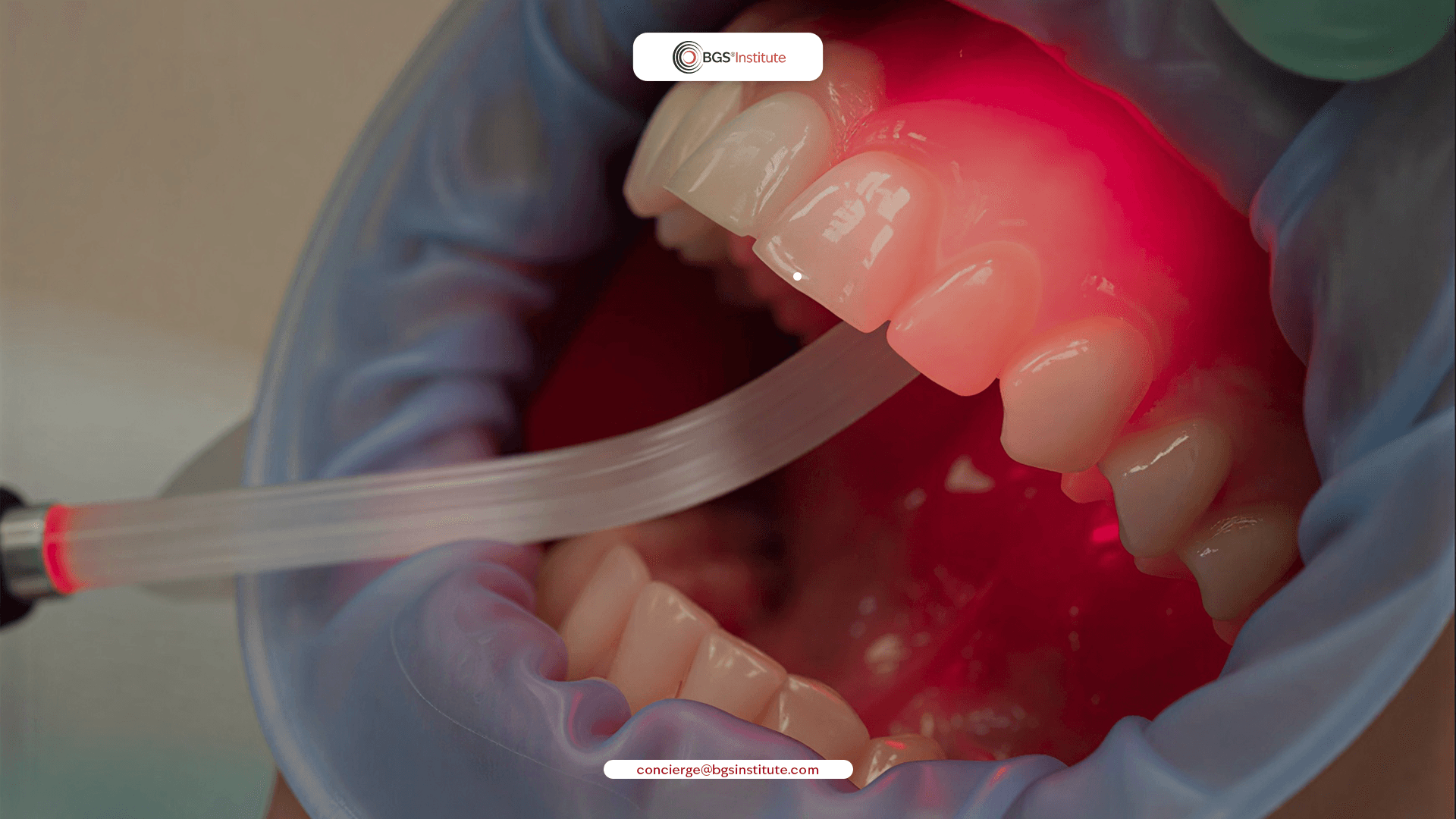
Ozone therapy works by targeting harmful oral bacteria while supporting healing and minimally invasive dental care.
At its core, ozone therapy uses a reactive form of oxygen that can interact with harmful oral pathogens and may support oxygen availability in treated tissues. In dentistry, ozone can be applied as:
Ozone gas
Ozonated water
Ozonated oils
Research suggests ozone may have antimicrobial activity against bacteria, fungi, viruses, and plaque biofilms commonly linked with oral disease (Source: NIH PMC3722714). One of the most important advantages of ozone dental treatment is its ability to penetrate areas that are difficult to reach with traditional therapies. Ozone can move deep into periodontal pockets, microscopic dentinal tubules, and infected tissue surfaces where bacteria often remain hidden. Research and experts like Dominik Nischwitz highlight its role in promoting safer, biologically focused healing approaches.
Clinical Benefits of Ozone Therapy in Dentistry
A major factor driving clinical interest in ozone is its broad range of practical applications.
Early Intervention Support
Ozone may help dentists address certain early-stage problems before they develop into larger issues. This can be useful in cases where bacteria control and enamel support are part of the treatment plan.
Natural Antimicrobial Action
Ozone may help reduce harmful bacteria, fungi, and viruses without relying heavily on pharmaceutical antibiotics. Research has demonstrated strong antimicrobial effects against oral pathogens associated with decay and periodontal disease (Source: NIH PMC12073129).
Faster Healing Support
Ozone may support tissue recovery by helping create a cleaner and more oxygen-rich local environment after procedures such as extractions and periodontal treatments.
Reduced Tooth Sensitivity
Ozone may help strengthen compromised enamel and reduce exposed dentinal sensitivity by encouraging enamel recovery.
Better Patient Comfort
Most ozone procedures are fast, gentle, and require minimal anesthesia. This can help reduce treatment anxiety for patients who fear conventional dental procedures.
Ozone Therapy for Gum Disease and Periodontal Care
Ozone therapy supports periodontal care by helping reduce harmful bacteria and promoting healthier gum tissue in Biological Dentistry.
Periodontal disease remains one of the most common chronic oral health problems worldwide. Harmful bacteria accumulate beneath the gums and trigger inflammation, tissue damage, and bone loss over time.
In periodontal care, ozonated water and ozone gas may help reduce bacterial accumulation in deep gum pockets and support healthier tissue conditions. This makes ozone a useful adjunct to professional cleaning, periodontal therapy, and biologically focused gum care protocols.
Research has shown that ozonated water can significantly reduce pathogenic bacteria linked with chronic periodontitis (Source: NIH PMC4911747).
Can Ozone Therapy Help Early Cavities?
Tooth decay begins when bacteria produce acids that weaken enamel and create demineralized areas. In the earliest stages of decay, the process may sometimes be slowed or stabilized before major structural damage occurs. This approach may help stabilize early demineralization by limiting cavity-causing bacteria and disrupting plaque biofilms.
Research by Baysan and other clinical investigations demonstrated that ozone significantly reduced bacterial counts in various lesions (Source: NIH PMC9915530).
This does not mean ozone replaces every restorative procedure. Deep or advanced cavities may still require conventional treatment. However, for early lesions, ozone may support a more conservative and biologically focused approach.
Ozone Therapy for Surgical Healing and Recovery
Healing quality after oral surgery plays a major role in patient comfort and long term outcomes. Ozone therapy is increasingly used before and after procedures to improve healing conditions and reduce microbial contamination.
In surgical settings, ozone protocols are often explored for extraction site disinfection, tissue oxygenation, post operative recovery support, and microbial control. Research suggests ozone may support soft tissue healing and help reduce post-operative inflammatory stress in some clinical settings (Source: NIH PMC12736172).
Safety and Scientific Evidence Behind Ozone Dentistry
One of the most common patient concerns is safety. Current evidence suggests that ozone therapy in dentistry is generally considered safe when administered correctly by trained professionals using controlled concentrations.
According to scientific literature, ozone has been used medically and dentally for decades. Controlled ozone application has shown low complication rates when proper clinical protocols are followed (Source: NIH - PMC8904924).
Potential side effects are usually associated with improper inhalation of concentrated ozone gas rather than professionally managed dental application. Scientific reviews continue evaluating the long term effectiveness of ozone in different dental procedures. While more large scale research is still needed for some applications, current evidence continues showing promising antimicrobial and biological response potential.
Why Biological Dentists Use Ozone Therapy

Biological Dentists increasingly use ozone therapy to support minimally invasive care, tissue preservation, and improved patient healing outcomes.
In advanced Biological Dentistry, ozone is often used as part of broader protocols for periodontal care, cavity management, surgical recovery, ceramic implant healing, and cavitation care. Its value comes from how it supports bacterial control and treatment-site preparation across different clinical situations.
How Dentists Learn Ozone Therapy Through Biological Dentistry Training
As ozone therapy becomes more common, structured education is important. Dentists need to understand proper concentration, application method, safety limits, case selection, and when ozone should or should not be used.
Biological dentist training, biological dentistry certification, and holistic dentistry certification programs can help clinicians learn evidence-informed protocols for ozone therapy, patient selection, safety, and treatment planning. For dentists researching how to become a biological dentist, ozone education is often part of a wider shift toward oral-systemic care, regenerative dentistry, and patient-centered treatment models.
As research continues exploring ozone therapy across periodontal care, wound healing, cavity management, and regenerative dentistry, dentists need structured training to use it safely and correctly (Source: NIH PMC10829373). The Biodentistry Global Standard Masterclass gives professionals a deeper way to study ozone protocols within advanced Biological Dentistry, oral-systemic care, and minimally invasive treatment planning.
Conclusion
Ozone therapy in dentistry may support bacterial control, gum care, early cavity management, and surgical recovery when used correctly. It does not replace every conventional dental treatment, but it can help dentists create cleaner treatment conditions and improve case planning.
For professionals, proper training remains essential because ozone therapy requires correct application, safety control, and patient selection.
FAQs
Is ozone therapy in dentistry safe?
Yes. Research suggests that ozone therapy is generally safe when administered by trained professionals using controlled concentrations. Most risks are associated with improper inhalation of concentrated ozone gas rather than standard clinical dental use.
Can ozone therapy heal cavities?
Ozone therapy may help manage very early stage cavities by reducing bacteria and supporting natural remineralization. Deep or advanced decay may still require restorative treatment.
Does ozone therapy replace antibiotics?
In some dental situations, ozone may reduce the need for antibiotics because of its antimicrobial properties. However, treatment decisions depend on the patient’s condition and professional evaluation.
Why do Biological Dentists use ozone therapy?
Biological Dentists use ozone because it supports minimally invasive care, natural healing, reduced chemical exposure, and tissue preservation while helping manage harmful oral bacteria.
Does ozone therapy hurt?
Most dental ozone applications are considered gentle and minimally invasive. Patients usually report little to no discomfort, although the experience may depend on the procedure being performed.
What is ozone therapy used for in dentistry?
Ozone therapy may be used to support gum disease care, early cavity management, surgical healing, tooth sensitivity, and oral disinfection protocols.